Course modified date: 7 March 2026
- Language: English
- Level: Intermediate
- Length: 20 Minutes
- Platform: AutoCAD
- Application: SSD
- Version: 2026
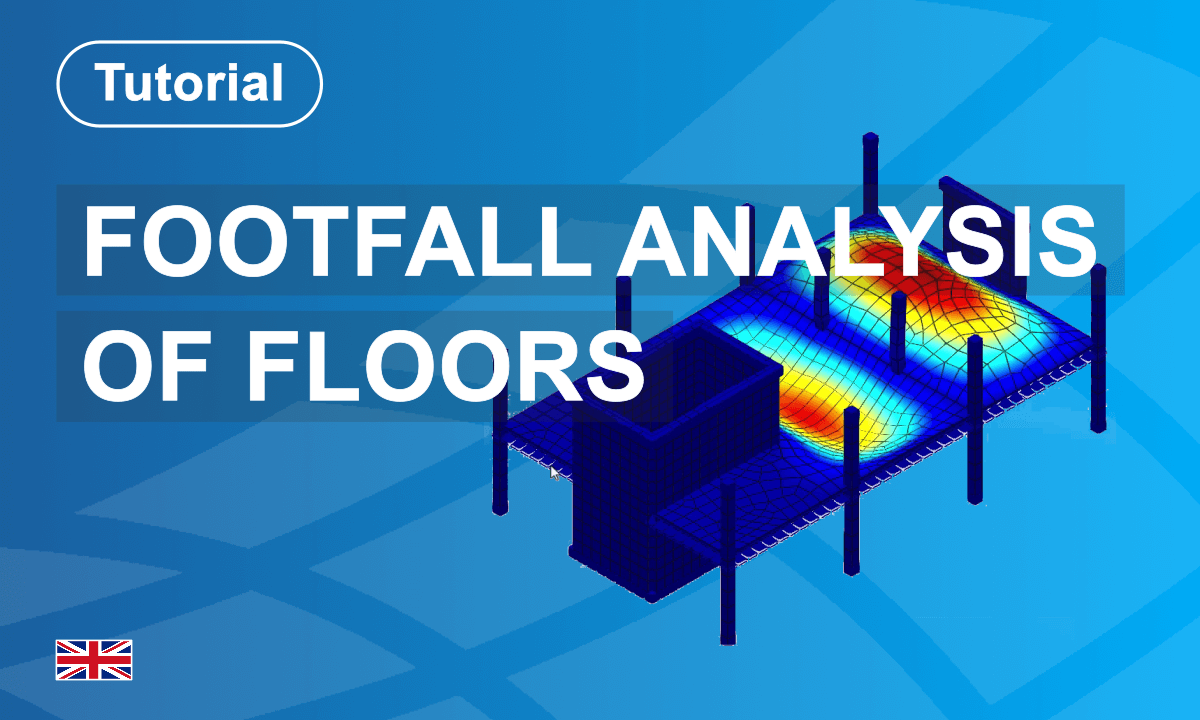
This tutorial focuses on footfall analysis, specifically evaluating the effects of human-induced vibrations (walking or running) on floors, with a primary focus on serviceability and occupant comfort. The analysis is used to assess whether a floor can withstand everyday use without causing discomfort or annoyance to occupants. This is especially important in environments such as offices, hospitals, or residential buildings, where vibrations can affect people’s well-being and performance. The workflow implemented in SOFiSTiK consists of three main stages:
- Floor Subsystem Generation:
In this stage, a floor of interest is selected, and its boundary and loading conditions are defined.
- Modal Analysis:
Modal analysis is then performed, providing an option to convert previously calculated load cases from the linear analysis into mass.
- Footfall Analysis:
This final stage involves defining the excitation and response positions, specifying the prescribed loading type, and selecting the steady-state and/or transient analysis.
The deliverables of the analysis are response factors, which provide a numerical measure of human comfort in response to footfall vibration. SOFiSTiK provides analysis and verification procedures under the following two design guidelines:
- CCIP-016 – A Design Guide for Footfall-Induced Vibration of Structures, published by the Concrete Centre (UK)
- SCI P354 – Design of Floors for Vibration: A New Approach, published by the Steel Construction Institute (UK)
- Teacher: Guido Altersberger
- Enrolled students: There are no students enrolled in this course.